Then, we were introduced to the latest technology is Science teaching which are Artificial Intelligence and Virtual Reality. I have come across the two terms before but never for once did I relate them with Science education.
Artificial Intelligence (AI) is defined as the intelligence of machines and the branch of computer science that aims to create it. The field involves the study and design of intelligent agents where an intelligent agent is a system that perceives its environment and takes actions that maximize its chances of success.
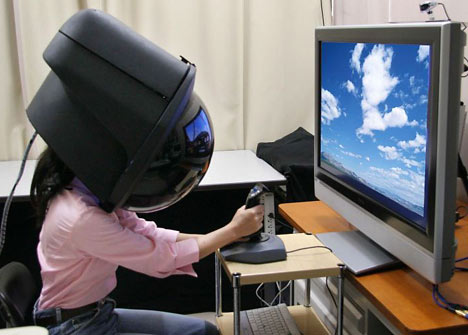
Virtual Reality (VR) is defined as the term that applies to computer-simulated environments that can simulate places in the real world, as well as in imaginary worlds. Most current virtual reality environments are primarily visual experiences, displayed either on a computer screen or through special stereoscopic displays, but some simulations include additional sensory information, such as sound through speakers or headphones.
They do sound futuristic. How are they possible and practical in teaching?
Based on my group research and presentation, AI can be used as intelligent tutoring software. For instance, the software can track students' work and give feedback and hints along the way. Hence, through collecting information on students’ performance, the software can make inferences about strengths and weaknesses, and thus suggesting additional remedial work. It is like a synthetic interactive tutor that is tutoring the students. Plus, the artificial tutor can give full attention to every student in a class.
In educational setting, VR that involves three-dimensional graphics would be an interactive approach to learn Science. For example, a school virtual reality program called 'Touch the Sky-Touch the Universe'. This school uses an interactive 3D model of the solar system. For instance, they can fly a virtual spaceship and also watch sun and moon eclipses. Other than that, they can even zoom in on the planets, moons, asteroids, and orbits. Personally, I believe that it can encourage the students to understand and learn better about the astronomy.
The knowledge about AI and VR has given me a different perspective and an insight into new technological approaches in teaching. However, some people would argue about the possibility and practicality. Looking back at the history of technology earlier, I would say that it is possible. Well, to quote someone; “Anything is possible.”

No comments:
Post a Comment