Monday, November 1, 2010

Week 14: Assignment 3, The Final Product!

The final week is the presentation of Assignment 3: The Development of Instructional Materials. Our group’s topic is Endangered Species for Year 6 and we have chosen blog as the platform of learning.

After the presentation, we were required to reflect on few questions related to the use of blog in Science teaching.

1) What is your opinion about the use of the platform in science class?

Integrating blog in the teaching of science is a great way to combine both the pedagogy and technology in education. Take our topic for example. The domain of the topic is knowledge. Therefore, young learners cannot only depend on the learning process in the classroom which is only limited to discussion with limited time. In order to acquire the knowledge and truly understand the topic, they are required to do lots of reading. Reading about endangered species is a great starting point for teaching children about endangered species (Kivi, 2010). However, it might be impractical to simply ask the pupils to go home and do their reading on their own. Instead, by using a blog as a platform for learning, teachers can monitor and encourage the learning by exposing them to reading. For example, the teacher can post a note for the lesson in the classroom that comes with some tasks. The pupils would be required to read the note and look for extra reading materials to do the tasks. Then, the pupils can show the teacher their work via email and she can reply the email as feedback. The teacher can also post an entry to display some good examples of the pupils’ work. As a result, the learning process would go beyond the classroom.

Based on our experience in developing a blog for Science teaching, I found that it is very flexible since some other tools can be integrated. It can support multi teaching platform such as chat room and video podcasting. Moreover, some Science subjects are vast, and therefore, the facts and figures are constantly changing. In order to ensure that the information you present to your pupils is current and correct, reliable websites are necessary. These websites can be linked through blogging. The blog can be a platform or portal for the pupils to explore and learn. For instance, teachers can keep the pupils posted and updated with various source in the Internet by creating useful links to reliable websites. Thus, there would be no shortage of information that teachers and students can use to explore this classroom topic.

2) How did the before and after the introduction to ADDIE model help in developing the instructional material?

In completing Assignment 2, before the introduction of the ADDIE model, we develop the blog without specific guidance and considerations. Therefore, the planning and developing were quite difficult. Everything is all over the place. For Assignment 3, the ADDIE helps us in a way that our previous planning could not. Basically, the model serves as a guide for us from the beginning to the end.

The earliest phase of the ADDIE model required us to analyze and come out with a concept map. The phase of analyzing the topic would assist teachers to analyze the content ideas, limitation and the focus of the materials. The second phase which is Design phase did help us in designing and visualizing how we want the material be represented as an instructional material. The Development phase gave us as insight into developing the materials and finally producing a solid product. In the end, we found that our product for Assignment 3 is way better that our previous blog.

3) Would you choose this platform? If yes, how would you use it?

One day, I would definitely use the platform in my teaching. Some people would argue about the possibility and practicality due to the lack of computers facility and internet connections especially in rural Malaysian schools. However, I believe this technology will be part of our teaching and learning process as we develop to achieve our vision 2020.

My ideal blog in education would be a platform for learning beyond the classroom. It would be a place for the pupils to explore and learn. The blog would be used to post latest information in order to ensure that the information I present to my pupils is current and correct. They should also be allowed to share their knowledge and ideas with others to widen their knowledge and increase critical thinking skill. Plus, I would use it as a form of formative assessment in which I could see the progress of my pupils and they themselves can reflect and self-assess on their work and thus working on improving their own weaknesses.

Week 13: Preparation for Assignment 3

Dr. Rohaida gave us the whole 3 hours for our final assignment. We took the opportunity to continue what we started last week and develop our instructional material. Each of my group members was assigned to finalize our product. We spent the time browsing the net, searching for the best materials to be included in our blog, designing the layout, and doing everything that needs to be done based on our storyboards.

Then, the only thing that needed to be done was finalizing everything. It included the report in which we have to write according to the learning problems and the whole process of our assignment.

Week 12: Planning and Development

Dr. Rohaida led a discussion that would help us in designing our instructional material. It was about the factors to consider for technology integration in Science education. Some of the points are

1) Suitability of the topics

2) Accessibility

3) Time

Later, we were given a chance to discuss our Assignmnet 3. This is our task:

DEVELOPMENT OF SIMPLE INSTRUCTIONAL MATERIALS (GROUP WORK)

Develop an instructional material for teaching science. You can choose any mode (eg. On-line materials INCLUDING Web 2.0 tools, CD, etc ) You need to present the instructional material to class and submit a written report in the following format:

    1. objective of the materials
    2. flowchart
    3. sample of hard copy of the materials

We have decided to choose blog as the learning platform for Year 6 classroom. The topic would be Endangered Species. The discussion was about the planning and development of our blog. Some of the aspects discussed included the layout, content and etc. based on our discussion, we came up with the storyboards.

Week 11: The ADDIE Model

After Assignment 2, we were introduced to the ADDIE model by Dr. Rohaida. She said that it would help us in Assignment 3.

The five phases of ADDIE are as follows:

Analysis

  • During analysis, the designer identifies the learning problem, the goals and objectives, the audience’s needs, existing knowledge, and any other relevant characteristics. Analysis also considers the learning environment, any constraints, the delivery options, and the time line for the project.

Design

  • A systematic process of specifying learning objectives. Detailed storyboards and prototypes are often made, and the look and feel, graphic design, user-interface and content is determined here.

Development

  • The actual creation (production) of the content and learning materials based on the Design phase.

Implementation

  • During implementation, the plan is put into action and a procedure for training the learner and teacher is developed. Materials are delivered or distributed to the student group. After delivery, the effectiveness of the training materials is evaluated.

Evaluation

  • This phase consists of (1) formative and (2) summative evaluation. Formative evaluation is present in each stage of the ADDIE process. Summative evaluation consists of tests designed for criterion-related referenced items and providing opportunities for feedback from the users. Revisions are made as necessary.

Week 9: Assignment 2

We had our presentation for the Assignment 2 in Week 9. After submitting the assignment, we needed to present our project on using the Web 2.0 tools in Science teaching. We had chosen blog as a platform to teach Year 6 pupils about Endangered Species.

This is the link to our blog: http://6adilscienceclass.blogspot.com/

The blog aims to allow the pupils learn in a collaborative way through interaction and sharing of knowledge among themselves and with teacher.

There are several features of the blog and each of them has their own purpose.

1) Lesson Notes

This page includes the entries on notes for all the lessons taught in the classroom.

2) Chat Room

This is a space where students can interact with the teacher and among themselves regarding on the lessons learnt in the classroom.

3) Video podcast

The teacher can attach videos podcast that students might need in order to understand the topic better.

4) Extra Readings and Materials

In this section, teacher will attach or embed the URL of all the materials that students might need to improve their learning.

5) Need Some Help?

This is the part whereby there will be some tips or hints given to the pupils about the examination.

After completing this assignment, I have learned how to integrate technology in Science teaching. As a teacher, we need to be aware of the suitability when using the web 2.0 technology. Some of the factors such as the accessibility, content and ease of use need to be considered.

Week8: Evaluation Rubrics

This week we have been introduced to Software Evaluation Rubric, Researched and Developed by Kristin Miller and Jacqueline Bach, SAS inSchool Interns, Summer, 2001. First and foremost, the rubric covers several aspect which refers to the software or websites. These softwares and websites are evaluated based on the several aspects such as the instructional contents, curriculum connections, graphics and multimedia, lay-outs, technical aspects, adaptability and accessibility, learner engagement and interactivity, teache and learner support material, assessment, age/grade level, and lastly flexibility.

Personally, we as teachers need to be very alert and careful when choosing a source from internet so that it has a high validity and useful to us and the students. We need to make sure that the source we took from internet fulfills certain criteria or aspects such as the reliability, accuracy and the value itself. In addition, we need to bear in mind that the information exists in net can be facts, opinions, stories, interpretations, statistics and it can also be fake too. Therefore, we really need to investigate by surfing all the nets and choose the best one which suits our needs and the criteria such as the accuracy, reliability, and much more.

Week 7: Web 2.0 Tools

We were introduced to Web 2.0 tools. Honestly, we were very familiar with the tools. The only difference was the fact that the lesson was not about updating blog about your personal life or downloading movies from the internet. It was all about education.

Some of the web tools:

WIKIS

BLOG

SOCIAL NETWORKING

MEDIA SHARING

“Web 2.0 is a revolutionary view of the Internet and the social and business uses of advanced technologies rather than the technical aspects of those technologies. The core concept of Web 2.0 is: Use Internet as a platform and leverage network effect to harness the collective intelligence in a cost-effective manner...”

Our group was assigned to do some research and present the use of blog in education. Blogs provide a communication space that teachers can utilise with students whenever there is a curriculum need to develop writing, share ideas and reflect on work being undertaken in the classroom. From an education perspective, the availability and ease of use of blogging make creating blogs a viable classroom activity.

Week 6: Microcomputer-based Laboratory (MBL)

Week 6 class took place in a Microcomputer-based Laboratory (MBL). We were introduced to the MBL strategy learned last week and given a chance to do a hands-on activity to experience ourselves. My group was assigned to conduct an experiment using the Voltage Current Sensor. The simple experiment aimed to determine the voltage of different number of cells using the Voltage Current Sensor.

First of all, we discussed about the steps. There are a few steps in conducting the experiment.

Voltage Current Sensor
1. The sensor is being plugged in to the computer.
2. EZscreen or DataStudio is selected from the window or programme files.
3. The voltage leads is being connected to one battery. The red lead is connected to the positive of the battery while the black lead to the negative.
4. Choose “Table” from the list of items in Datastudio.
5. Click “Start”
6. The voltage and ampere of the battery is displayed on the screen.
7. The data is being recorded on a piece of paper.
8. Step 3 to 7 is being repeated with 2 and then 3 batteries.

After the experiment, we reflected on the use of MBL in Science teaching. We found that it is user-friendly and safe to use especially when the experiment requires dangerous substances like acids and bases. Plus, the data collected is very fast and accurate. In addition, the data can also be converted into graph and table. Therefore, we can save time. Manipulative skills can also be promoted.

However, I personally think that it is suitable to be used only for Level 2 students and more appropriate to be used in secondary schools due to its impracticality. Moreover, the cost of the strategy is very high. In rural Malaysian schools, it might be difficult to be implemented. Plus, teachers need to be well trained so that they can troubleshoot any problems. Science process skills are also less promoted as it provides instant information just by clicking. Still, teachers can incorporate traditional methods with the technology-based method.

I must say that the experience is very enriching to me. It is something that we do not learn every day.

Week 5: Do it right!

In Science teaching and learning, application tools are crucial. Dr. Rohaida led a discussion about seven strategies in designing application tools for Science teaching and learning.

1) Microcomputer-based laboratory (MBL)

A microcomputer is used to collect, store, process, and analyze data. There are a large number of data collection sensors available today that are inexpensive and also easily connect to microcomputers. Some examples include measurement of force, pressure, temperature, electric voltage and current, light intensity, UVB and UVA, stream flow, dissolved oxygen, pH, etc.

2) Drill and Practice

It is a structured, repetitive review of previously learned concepts to a predetermined level of mastery.

3) Tutorials

It involves an interactive class which is taught by a tutor individually or in small groups.

4) Simulations

The act of simulating something generally entails representing certain key characteristics or behaviours of a selected physical or abstract system.

5) Problem-solving

It is a mental process and is part of the larger problem process that includes problem finding and shaping.

6) Informational retrieval

It is the technique and process of searching, recovering, and interpreting information from large amounts of stored data.

7) Educational Games

Educational games are games that have been specifically designed to teach people about certain subjects, expand concepts, reinforce development, understand historical events or culture, or assist them in learning a skill as they play.

In my opinion, we might not be able to use the MBL strategy. This is due to the fact that it can be impractical in rural Malaysian schools. On the other hand, the other strategies seem practical. In fact, based on my experience, most teachers use drill and practice, tutorials and educational games. However, every strategy requires teachers to consider many things. Drill and practice, for example, might be good for memorizing but understanding the concept might be tricky. Plus, educational games can be fun and interactive for pupils. Still, teachers need to consider classroom management.

In conclusion, there are many strategies that teachers can use in Science teaching. In fact, many remain unexplored.

Week 3: Once Upon A Time

The lesson started with a brief presentation on the history of technology in teaching by Dr. Rohaida. During the lesson, we looked into the past. Of course, learning from the past is crucial. We can see how the technology in teaching evolves. Over the years, people invent new inventions that help human to do things that we once thought were impossible.

Then, we were introduced to the latest technology is Science teaching which are Artificial Intelligence and Virtual Reality. I have come across the two terms before but never for once did I relate them with Science education.

Artificial Intelligence (AI) is defined as the intelligence of machines and the branch of computer science that aims to create it. The field involves the study and design of intelligent agents where an intelligent agent is a system that perceives its environment and takes actions that maximize its chances of success.

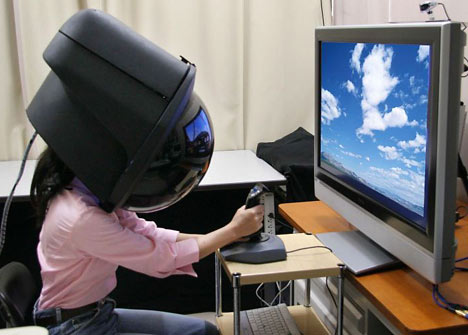
Virtual Reality (VR) is defined as the term that applies to computer-simulated environments that can simulate places in the real world, as well as in imaginary worlds. Most current virtual reality environments are primarily visual experiences, displayed either on a computer screen or through special stereoscopic displays, but some simulations include additional sensory information, such as sound through speakers or headphones.

They do sound futuristic. How are they possible and practical in teaching?

Based on my group research and presentation, AI can be used as intelligent tutoring software. For instance, the software can track students' work and give feedback and hints along the way. Hence, through collecting information on students’ performance, the software can make inferences about strengths and weaknesses, and thus suggesting additional remedial work. It is like a synthetic interactive tutor that is tutoring the students. Plus, the artificial tutor can give full attention to every student in a class.

In educational setting, VR that involves three-dimensional graphics would be an interactive approach to learn Science. For example, a school virtual reality program called 'Touch the Sky-Touch the Universe'. This school uses an interactive 3D model of the solar system. For instance, they can fly a virtual spaceship and also watch sun and moon eclipses. Other than that, they can even zoom in on the planets, moons, asteroids, and orbits. Personally, I believe that it can encourage the students to understand and learn better about the astronomy.

The knowledge about AI and VR has given me a different perspective and an insight into new technological approaches in teaching. However, some people would argue about the possibility and practicality. Looking back at the history of technology earlier, I would say that it is possible. Well, to quote someone; “Anything is possible.”

Sunday, August 8, 2010

Week 4: Learning Theories

The lesson was about learning theories. Before learning about the integration of technology in Science lesson, it is important to have a strong basis on the knowledge of learning theories that support teaching and learning. The two theories are behaviorist and constructivist theories.

Behaviourist Theory

It involves direct instruction that assigns a central role to the teacher in explaining, modeling, and providing opportunities for practice with feedback. The goals are understanding, logic behind skills; automaticity, skills are over learned to the point that they are used with little mental effort; and transfer, something learned at one time is applied later in another setting.

This approach proposes a teacher-centered classroom. A teacher should be an efficient planner of the whole lesson. Lesson can be very structured as they have to follow teacher's instructions and steps in order to learn a subject. I think this is a very rigid condition of learning. Still, it is also useful when it comes to theoretical based-learning and the lesson taught should achieve intended learning outcomes. Thus, procedures are needed to monitor the progress of the lesson.

Constructivist Theory

This approach argues that humans generate knowledge and meaning from an interaction between their experiences and their ideas. Piaget called these systems of knowledge schemata. Learners construct their own understanding rather than having it delivered or transmitted to them. Learners use their own experiences to construct understandings that make sense to them. New learning depends on prior understanding and is interpreted in the context of current understanding, not first as isolated information that is later related to existing knowledge.

The focus of the lesson was ‘Behaviourism vs. Constructivism’ and how learning about these theories serves as a guide for me to understand more about human nature of learning.

Thursday, July 22, 2010

Week 2: Hey, Science! Meet Technology!

"Integration of Technology in Primary Science Teaching". What exactly does it mean to you? Well, let me tell you.

Before that, let me ask you another question. What is technology? Professor Dr. Rohaida asked us the same question during the first class. We all gave many different answers since the word 'technology' itself has many definitions. It can be defined as the application of practical sciences to industry or commerce. It can also be defined as the methods and tools that a society has developed in order to facilitate the solution of its practical problems. Basically, it makes our life easier.

There has been some talk about people getting tired of technology. Well, they should consider the possibility of living in a cave! Technology has become, within a very short time, one of the basic building blocks of modern society. Take Information and Communication Technologies (ICT) for example. Even though Facebook does not really benefit people in principle, it still, so to speak, comes before food and sleep to some people.

Back to the question. What exactly does this course mean? In aswering the question, we have to define technology in educational context.